


For Women’s History Month, each week we will highlight a major female contributor to the field of psychology. Today, we discuss Mary Ainsworth.
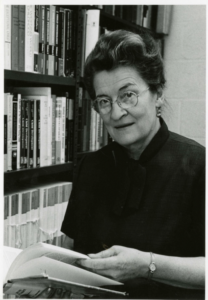
Mary Ainsworth (1913–1999) was a Canadian developmental psychologist best known for her pioneering work in attachment theory. Born on December 1, 1913, in Glendale, Ontario, Canada, Ainsworth’s research and insights into the parent-child bond have left an enduring impact on our understanding of human development and relationships.
Ainsworth completed her undergraduate studies at the University of Toronto, where she initially focused on grammar and language, though later shifted to psychology for her graduate studies. In 1939, she completed her Master’s degree, examining the impact of maternal separation on children.
In 1950, Ainsworth earned her Ph.D. from the University of Toronto, and shortly afterward, she joined the East London Child Guidance Clinic in the Unit
ed Kingdom. It was during her time in London that Ainsworth began her influential work on attachment theory, building on the foundational ideas of John Bowlby, a British psychiatrist and psychoanalyst.
Attachment theory, developed collaboratively by Ainsworth and Bowlby, posits that the early interactions between infants and their primary caregivers shape the child’s emotional and social development. Ainsworth’s major contribution to this theory came through her development of the “Strange Situation” procedure, a research methodology designed to observe and classify the attachment styles of infants.
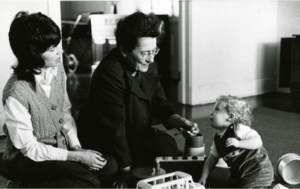
The Strange Situation involved a series of brief separations and reunions between a child and their caregiver in a controlled environment. Ainsworth and her colleagues carefully observed the infants’ behaviors, such as exploration, reactions to the caregiver’s departure and return, and the child’s use of the caregiver as a secure base. Based on these observations, Ainsworth identified three primary attachment patterns: secure attachment, insecure-avoidant attachment, and insecure-ambivalent/resistant attachment. Later research added a fourth category, disorganized attachment.
The development of these attachment classifications provided a valuable framework for understanding the dynamics of parent-child relationships and their impact on a child’s socioemotional development. Ainsworth’s work demonstrated that a secure attachment to a caregiver during early childhood is associated with positive outcomes in areas such as emotional regulation, social competence, and cognitive development.
Her research had practical applications, as it helped inform parenting practices, interventions, and therapeutic approaches for children experiencing attachment-related challenges. Ainsworth’s contributions were especially significant in the fields of developmental psychology, clinical psychology, and psychiatry.
In 1975, Mary Ainsworth returned to the United States and accepted a position at the University of Virginia. Her work continued to influence generations of psychologists and researchers. Ainsworth’s professional accolades include serving as the President of the Society for Research in Child Development (1977-1979) and receiving the G. Stanley Hall Award from the American Psychological Association in 1984.
Mary Ainsworth’s impact on psychology extends beyond her groundbreaking research. She played a key role in establishing attachment theory as a foundational framework in developmental psychology, influencing not only research practices but also clinical applications and educational approaches. Her legacy lives on through the ongoing exploration and application of attachment theory, enriching our understanding of human relationships and shaping the fields of psychology and child development.