

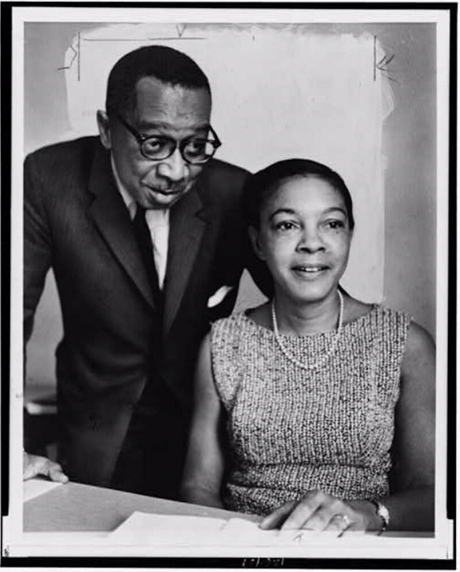
For Women’s History Month, each week we will highlight a major female contributor to the field of psychology. Today, we discuss Mamie Phipps Clark.
Mamie Phipps Clark (1917-1983) was a pioneering African American psychologist who made significant contributions to our understanding of the psychological effects of segregation and discrimination on the basis of race. Born on April 18, 1917, in Hot Springs, Arkansas, Mamie Phipps Clark grew up in the Depression-era Jim Crow South. Though her experiences growing up as a Black girl in a segregated society profoundly influenced her life and later work, she also described her childhood home as “warm and protective” and “very privileged;” her father was a physician and her mother was a homemaker.
Clark earned her bachelor’s degree in psychology from Howard University in 1938 and went on to earn her master’s degree at the same institution the next year. Clark continued her studies in psychology at Columbia University and, in 1943, became the first Black woman to receive a Ph.D. in psychology from the University.
Clark’s most notable contributions to psychology were her groundbreaking research on the effects of segregation on Black children. Along with her husband and fellow psychologist Kenneth Clark, who was also a psychologist, Mamie conducted a series of studies that would later be known as the “Doll Tests,” which examined the psychological impact of racial segregation on children’s self-perception and self-esteem.
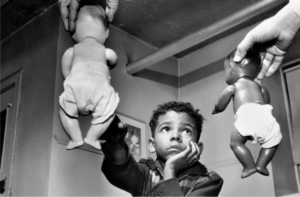
The Doll Tests involved presenting children with identical dolls that only differed in skin color. The results consistently showed that Black children, when asked to choose the “good” doll or the one they preferred, often selected the white doll, associating it with positive attributes. This research provided compelling evidence of the detrimental effects of segregation on the psychological well-being of Black children, revealing the internalization of racial biases from a young age.
Mamie Phipps Clark’s research findings were instrumental in deciding the landmark Supreme Court case of Brown v. Board of Education (1954). Her work was cited as evidence that racial segregation in public schools had a detrimental impact on the mental and emotional well-being of Black children, leading the Supreme Court to declare that “separate educational facilities are inherently unequal.” This decision marked a crucial turning point in the fight against racial segregation in the United States and laid the foundation for the civil rights movement.
Mamie Phipps Clark’s legacy extends beyond her research and advocacy. Her work paved the way for future generations of psychologists, particularly those from underrepresented backgrounds, inspiring them to pursue careers in research and activism. Today, she is remembered as a trailblazer in psychology, whose contributions played a pivotal role in dismantling legal segregation and promoting a more equitable and inclusive society. Mamie Phipps Clark’s impact on both the field of psychology and the broader social and legal landscape continues to be celebrated as a testament to the power of research in promoting positive social change.