

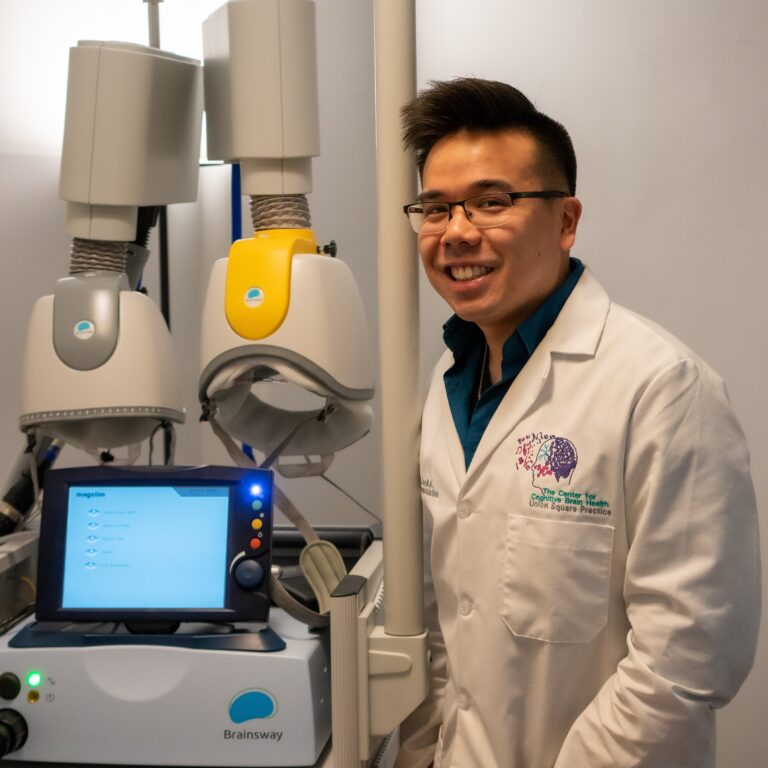
Transcranial Magnetic Stimulation (TMS) is a new, drug-free, non-invasive form of treatment used for psychiatric disorders, namely depression and obsessive compulsive disorder (OCD). Since 2008, it has been FDA-approved for depression and recently received FDA-approval for OCD in August 2018.
TMS works by sending magnetic pulses via a helmet to your brain’s prefrontal cortex, located above the left-side of your forehead. This kind of stimulation helps regulate the electrical activity in your brain and thereby helps reduce symptoms of depression or OCD over a period of 6 – 8 weeks. The treatment itself is painless and does not involve taking anesthesia After TMS, you may continue your day right after treatment – no additional monitoring or medications are needed. TMS therapy is administered 5 days a week for 6-8 weeks, with each individual session lasting about 20-30 minutes. Many patients report symptom improvement by the 4th week of treatment, though some have had improvement as early as 2 weeks or as late as 6 weeks.
The side effects of TMS therapy are very mild, with the most common one being a mild-moderate headache and/or mild-moderate pain at the application site. Before any treatment, patients will meet with our psychiatrist, Dr. Joseph Marlin, for a comprehensive evaluation to determine what treatment is most appropriate and to assess and contaminations
Check us out next Monday for another post regarding TMS! We will discuss who’s right for TMS and what to expect from start to finish!
Learn more about TMS on our website at www.unionsquarepractice.com/tms.